


At Common Ninja, we build a platform that helps businesses add powerful functionality to their websites without code.
Over the years, that platform has grown significantly. Today, Common Ninja includes hundreds of widgets, dozens of integrations, advanced configurations, and workflows that serve very different users - from small business owners and creators to agencies, developers, marketers, and support teams. It runs across multiple website builders and platforms, each with its own quirks and constraints.
It’s a flexible and powerful platform - and that also makes it complex.
As the product grew, one challenge kept coming back again and again:
How do we help users truly understand how to use everything we build?
Teaching a Complex Product as a Small Team
Like many SaaS companies, we don’t have a huge marketing or documentation team.
We’re a relatively small team building a large product, and we rely heavily on clear onboarding, good tutorials, and self-serve documentation. If users don’t understand how to use the product, they won’t get value from it - no matter how powerful it is.
Videos quickly became our go-to solution.
Screen recordings, walkthroughs, feature demos - they’re one of the fastest and most effective ways to explain complex flows. A short video can show context, intent, and results far better than long blocks of text.
So we recorded a lot of them.
And that’s where the real problem started.
Recording Is Fast. Everything After Is Slow.
Recording the video itself was never the issue.
The issue was everything that came after.
Each video needed subtitles so it would be accessible and usable without sound. Often, it needed a clean voiceover. Many times, it needed to be translated for non-English users. On top of that, we still had to write a step-by-step help article so the information would be searchable, skimmable, and useful inside our help center.
Then came screenshots, annotations, formatting, SEO, and keeping everything up to date whenever the UI changed.
What looked like a “quick video” turned into hours of post-production work.
For a small team shipping fast, this friction adds up quickly. Documentation gets postponed. Videos get shared without proper context. Support teams answer the same questions repeatedly. Not because the answers don’t exist - but because they’re scattered, incomplete, or out of sync.
The Gap Between Videos and Documentation
What we realized is that videos and documentation live in two different worlds.
Videos are great for humans. They show motion, intent, and flow. Documentation is great for scale. It’s searchable, indexable, and easy to reference. But most tools force you to choose one or manually stitch the two together.
Video tools stop at the video. Documentation tools ignore the video. Subtitle and voiceover tools focus on media, not understanding. None of them think holistically about how people actually learn how to use a product.
The result is fragmented knowledge. Videos that don’t match the docs. Docs that don’t reflect the product anymore. And users who are left guessing.
This wasn’t just a tooling problem. It was a broken workflow.
Vidocu Started as an Internal Tool
At some point, we stopped looking for another tool and decided to build one ourselves.
We asked a simple question:
What if one video could generate everything around it automatically?
That internal experiment became Vidocu.
Initially, Vidocu was built purely for Common Ninja. We wanted a way to upload a recording and automatically get subtitles, a natural-sounding voiceover, a structured step-by-step help article, and the right screenshots with annotations - all aligned, all generated from the same source.
The impact was immediate.
What used to take hours took minutes. Documentation stayed in sync with the product. Videos became accessible and global by default. Our help center became clearer, more consistent, and easier to maintain. Most importantly, documentation stopped being something we “meant to do later” and became part of our workflow.
From Internal Solution to Standalone Product
As we continued using Vidocu internally, it became clear that this wasn’t just our problem.
Every product team, support team, and creator we spoke to shared the same frustration. Recording is fast. Explaining, documenting, localizing, and maintaining everything around the recording is what slows teams down.
So we decided to turn Vidocu into a standalone product.
What Vidocu Is Really About
Vidocu isn’t just about subtitles. It’s not just about voiceover. And it’s not just about documentation.
It’s about removing the post-production tax that comes after recording a video.
With a single upload, Vidocu generates subtitles, natural AI voiceover, multi-language localization, a step-by-step SEO-optimized help article, and auto-captured screenshots with annotations - all in one place, with built-in editors when you need control.
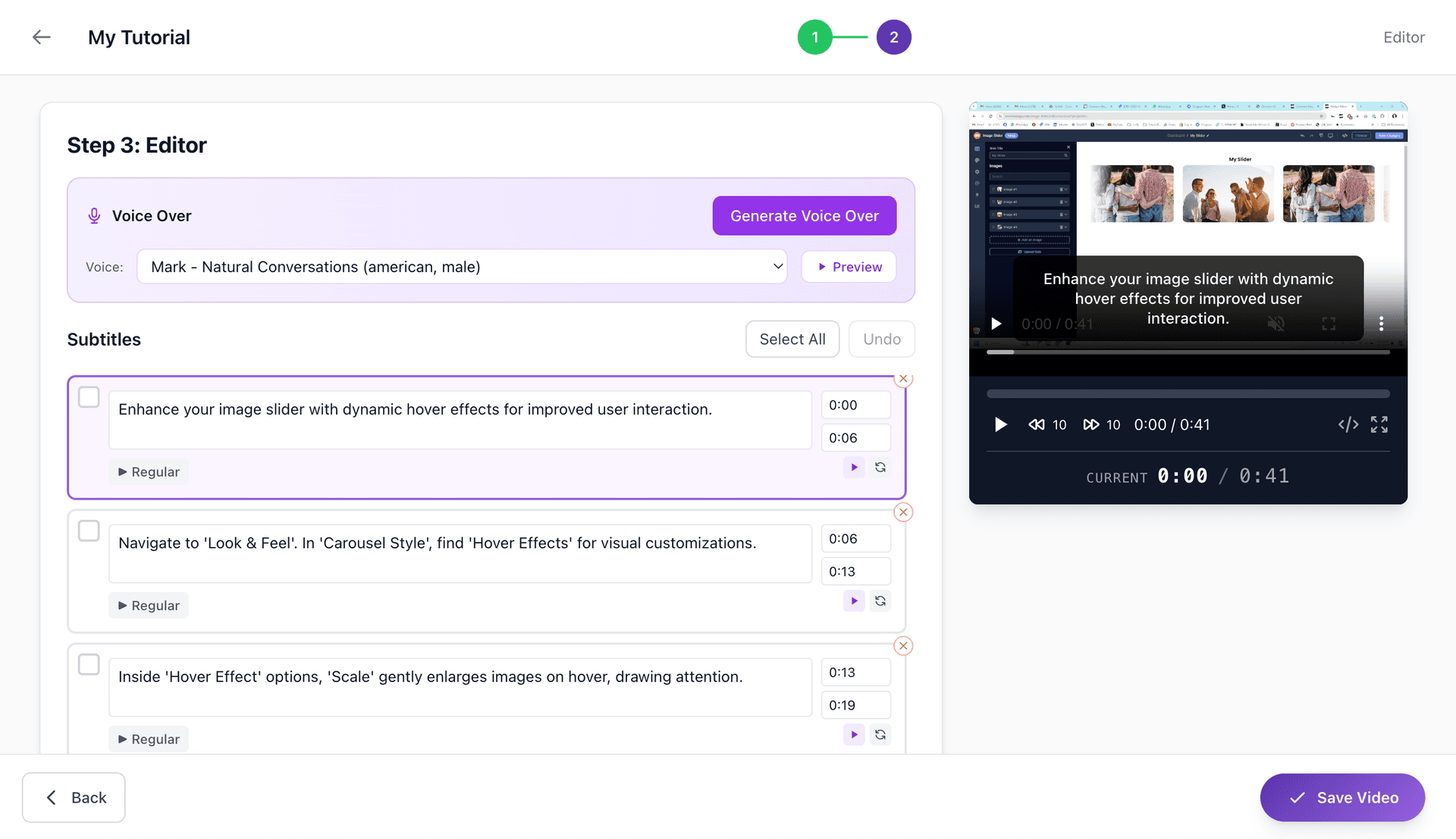
One recording. Professional output in minutes.
Built by a Small Team, for Busy Teams
We built Vidocu because we are the kind of team it’s made for.
Teams that move fast, don’t have endless content resources, and still need to explain complex products clearly. Teams that want users to succeed without opening tickets. Teams that care about accessibility, global reach, and documentation that actually stays up to date.
Vidocu is our way of making sure that teaching your product doesn’t slow you down.
If you record videos to explain, onboard, train, or support users - this is for you.
We’re launching soon and opening early access.
If this story sounds familiar, we’d love to have you join us.

Written by
Daniel SternlichtDaniel Sternlicht is a tech entrepreneur and product builder focused on creating scalable web products. He is the Founder & CEO of Common Ninja, home to Widgets+, Embeddable, Brackets, and Vidocu - products that help businesses engage users, collect data, and build interactive web experiences across platforms.